The Villages on the River
Long before the Lewis and Clark expedition passed through, the upper Missouri had been a center of trade, agriculture, and politics for centuries.
A World Built on the River
The Mandan and Hidatsa people had been living in permanent villages on the upper Missouri long before Europeans reached the continent. Their earthlodges — timber-framed, earth-covered, capacious enough to shelter an extended family and their horses — lined the high bluffs and terraces above the river, and from those positions they worked the bottomlands below. Corn, squash, beans, and sunflowers grew in the rich Missouri floodplain soil. Bison were hunted on the surrounding prairie. The river itself was highway and larder both.
The Knife River confluence with the Missouri, near present-day Stanton, was one of the most important addresses on the northern plains. Mandan and Hidatsa villages clustered at and near this junction had been accumulating power and population for generations. By the time French and British traders began arriving from Canada in the eighteenth century, the villages were already established nodes of a continental trade network. Goods moved through them from the Pacific coast, the Great Lakes, and the Gulf — shell ornaments, copper, horses, guns — and the villagers were shrewd, experienced traders who set terms on their own ground.
The earthlodge villages were not seasonal camps. They were cities in any meaningful sense: densely settled, socially complex, politically organized, with ceremonial structures, communal plazas, and defensive palisades. The Mandan in particular maintained villages on both sides of the Missouri in McLean County's general territory, at sites that archaeologists have documented in detail.
The Winter of 1804–05
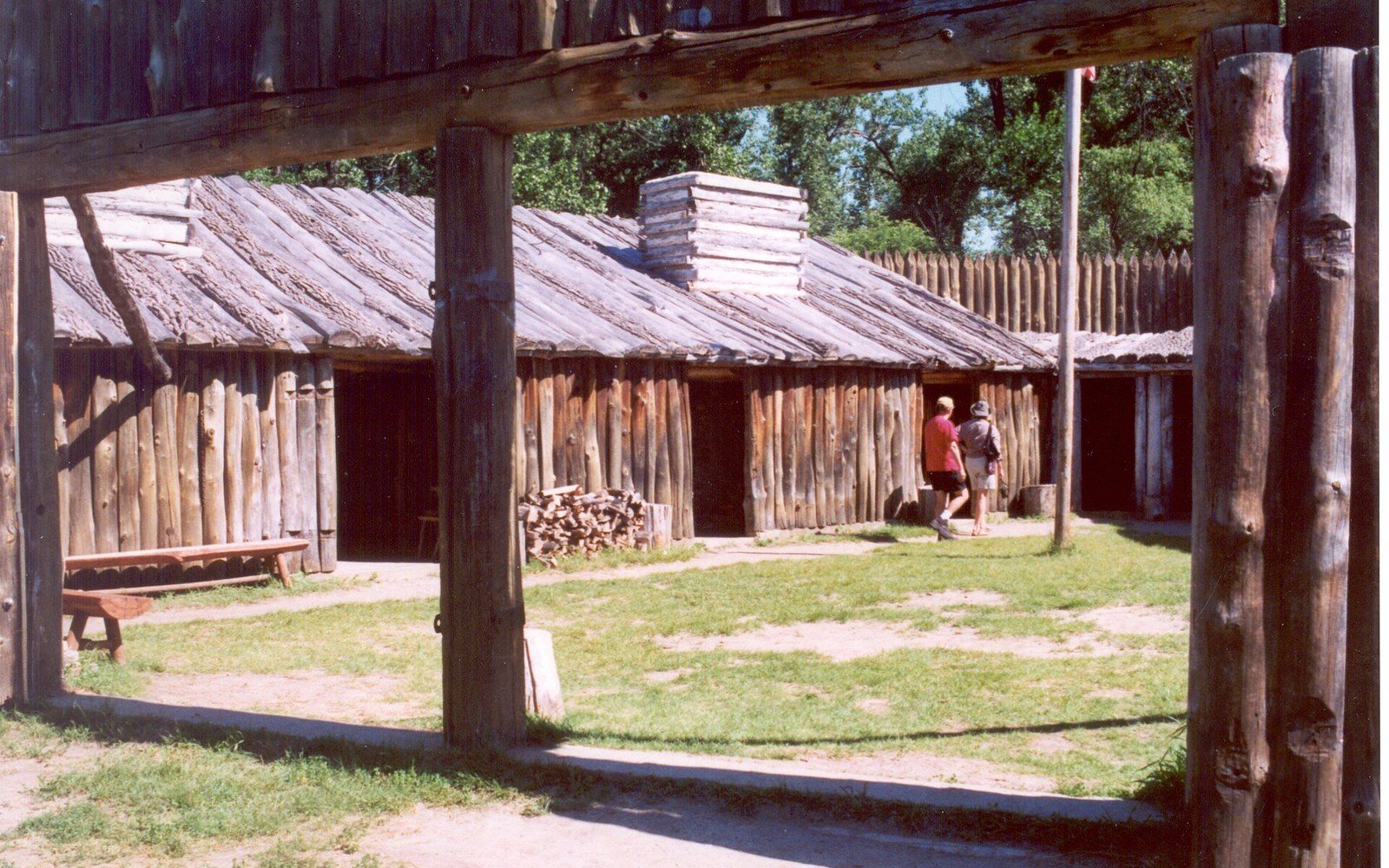
When the Lewis and Clark expedition arrived in the fall of 1804, they were moving into a populated, politically sophisticated landscape. The Corps of Discovery wintered near a cluster of Mandan and Hidatsa villages, building the small stockade they called Fort Mandan, roughly twelve miles downstream from the Knife River villages. The expedition's journals record the scale and vitality of what they encountered: villages of hundreds of earthlodges, large populations, active trade fairs that drew Lakota, Assiniboine, Crow, and others from across the region.
Sakakawea — a Shoshone woman who had been brought to the Hidatsa villages as a captive and was living there with her husband, the trader Toussaint Charbonneau — joined the expedition here. Her presence and knowledge proved essential in the months that followed. The name she carries today is given to the reservoir that now covers much of this reach of the Missouri.
Smallpox and What Came After
The nineteenth century was catastrophic for the river villages. Smallpox epidemics — particularly the devastating outbreak of 1837 — reduced populations that had numbered in the thousands to fractions of their former size. The Mandan, once numerous enough to maintain multiple large villages, were reduced to a few hundred survivors. Hidatsa and Arikara communities suffered similarly. The three nations eventually consolidated, and their descendants are the citizens of the Mandan, Hidatsa and Arikara Nation — the MHA Nation — whose tribal lands lie primarily in Mercer, Dunn, McLean, and Mountrail counties today.
What remains of the physical record of the river villages is preserved and interpreted at the Knife River Indian Villages National Historic Site near Stanton. The depressions of earthlodge floors are still visible in the ground there, arranged as they were when the lodges stood. It is worth stopping — not as a scenic detour, but to stand inside the outline of a building that was standing when this part of the world was still mostly beyond European knowledge.
How it happened
- Pre-contactMandan and Hidatsa established in permanent earthlodge villages on the upper Missouri
- 18th centuryFrench and British traders arrive; villages already functioning as major trade centers
- 1804–05Lewis and Clark winter near the villages; Corps of Discovery journals record their scale
- 1837smallpox epidemic devastates Mandan, Hidatsa and Arikara populations
- Presentdescendants are citizens of the MHA Nation; Knife River site preserves physical remains